
Existing Utah homes
Attic Insulation Evaluation and Installation
Interwest helps homeowners understand what is already in the attic, identify conditions that should be addressed first, and define an insulation scope for the actual home.
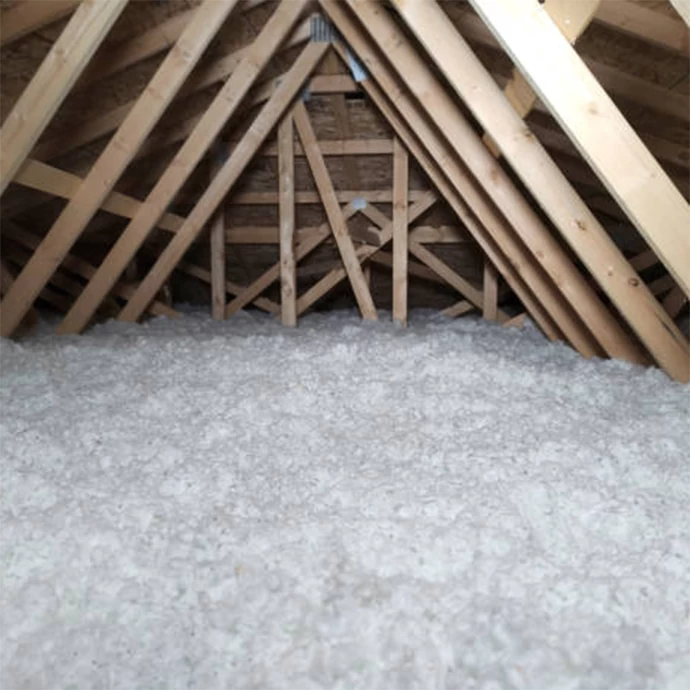
Start with what is there now
A good attic plan starts with the existing conditions
A comfort problem can come from low or uneven insulation, air leakage, disconnected ducts, mechanical issues, moisture, or several conditions working together. Interwest visually reviews accessible areas and can use an infrared thermal-imaging camera when the indoor-outdoor temperature difference makes it useful.
Combining thermal imaging with a visual attic review helps identify likely hot and cold spots and guide the insulation recommendation.
A practical sequence: address important leaks, moisture, and air pathways, then add insulation to the recommended specification. Your estimate will clearly identify the work Interwest will provide.
Utah attic R-values
Many existing homes have less than current retrofit guidance
R-value measures resistance to heat flow; the visible depth by itself does not tell the whole story because materials have different R-values per inch and settled or compressed insulation performs differently. In Interwest’s experience, many Utah County homes were originally insulated around R-38, while many older homes are closer to R-30.
Current ENERGY STAR guidance for relevant Utah climate zones commonly recommends approximately R-49 to R-60 for attic retrofits, depending on the existing insulation level. Interwest uses the material, current R-value, attic geometry, safe clearances, ventilation, local requirements, and project goals to recommend the needed depth. See ENERGY STAR’s current R-value guidance.
What an attic review considers
Conditions that can change the recommendation
- Existing insulation type, approximate depth, distribution, settlement, and contamination
- Accessible gaps, low areas, attic hatches, penetrations, and other likely air pathways
- Roof or plumbing leaks, condensation, staining, odor, and visible moisture concerns
- Bathroom fans, dryer exhaust, ducts, and other equipment that should terminate or operate correctly
- Soffit, baffle, and ventilation conditions that must remain functional
- Recessed lights, flues, chimneys, wiring, and equipment requiring safe clearances
- Roof, electrical, solar, heating and cooling, or remodeling work planned before or after insulation
Some conditions require another qualified trade before insulation proceeds. The written estimate should identify the assumed condition of the attic and the insulation work included.
Add or remove?
Existing insulation often can remain
Dry, clean, safe, and reasonably distributed insulation can often stay in place while additional insulation is added. Removal is more likely to be considered when material is wet, contaminated by pests, affected by fire or smoke, persistently odorous, or concealing work that must be repaired. Suspected vermiculite should not be disturbed without appropriate evaluation because some vermiculite insulation may contain asbestos.
Your project-specific estimate will clearly list any included removal, air sealing, specialty cleanup, duct work, or other preparation.
What to include in your request
- The home’s city, approximate age, and area of concern
- Comfort symptoms, visible attic conditions, or prior energy work
- Anything known about insulation type, depth, or earlier installation
- Known leaks, moisture, pests, odors, damaged ducts, or electrical concerns
- Whether roof, electrical, solar, mechanical, or remodeling work is planned
- Photographs you are comfortable sharing
Attic insulation questions
How much attic insulation does a Utah home need?
R-value is the useful starting point for deciding how much attic insulation to add. In Interwest’s experience, many existing Utah County homes are around R-38 and many older homes are closer to R-30, while current ENERGY STAR retrofit guidance for Utah climate zones commonly points to approximately R-49 to R-60. Interwest can evaluate the existing insulation, attic design, and project goals, then recommend the amount and depth needed for the selected material.
Can Interwest check for hot and cold spots?
Yes. Interwest can use an infrared thermal-imaging camera when the indoor-outdoor temperature difference makes it useful. Combining those images with a visual inspection helps identify likely insulation gaps, air leakage, duct, moisture, or HVAC concerns.
Can new insulation be added over existing insulation?
Often, yes. Existing material can continue contributing R-value when it is dry, clean, safe, and reasonably distributed. Interwest can evaluate it, address important moisture, ventilation, clearance, duct, or air-leakage concerns, and then add the material needed to reach the planned target.
Should old attic insulation always be removed?
Existing attic insulation can often remain in place and continue contributing R-value. Removal becomes the better choice when material is wet, contaminated, smoke-damaged, persistently odorous, otherwise unsafe, or covering a condition that must be repaired.
Does Interwest remove old insulation or provide air sealing?
Interwest can review removal and air-sealing needs as part of the attic conversation. Include those concerns in your request so availability can be confirmed, and the written estimate will clearly state any removal, air sealing, or related preparation included in the project.
Are rebates or incentives available?
Rebates or tax incentives may be available for insulation and air-sealing improvements that meet current program requirements. Because programs and eligibility can change, confirm the current requirements with the program provider or tax professional. Interwest’s written estimate will show the project price separately so any available benefit is easy to evaluate.
Does attic insulation guarantee lower bills?
Attic insulation can improve comfort and reduce heating and cooling demand, especially when a home begins with low insulation levels or significant air leakage. Actual bill savings vary with the home, weather, equipment, utility rates, and occupant use, so Interwest focuses on recommending the right work rather than promising a specific dollar amount.
Google customer reviews
See why Utah homeowners recommend Interwest
Customers consistently mention responsive communication, careful work, professionalism, and results they are glad to recommend.