
The best time to think about basement noise is while you can still see the ceiling joists. Once drywall covers them, adding insulation takes more planning and creates access holes that need to be closed. If you are finishing a basement in Utah, put ceiling sound insulation on the schedule before the drywall crew arrives.
Start with the rooms above and below
Walk through the basement with the upstairs floor plan in mind. A bedroom below a kitchen has different noise concerns from a storage room below a hallway. Tell us where people will sleep, watch television, work, or play music. If you plan to rent the basement, think about privacy in both directions: upstairs conversations can travel down, and a basement television can carry upstairs.
Decide which ceiling areas and interior walls need attention. Exterior basement walls also need a separate comfort and moisture review. Insulating those walls does not automatically address sound passing through the ceiling.
How we install ceiling insulation
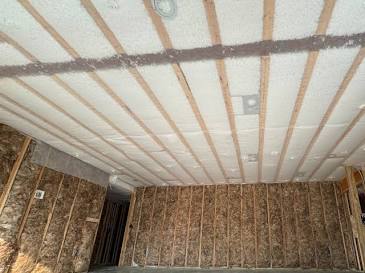
When the ceiling is open and accessible, we net the ceiling with mesh or netting, securing it with staples. Then we poke a hole in each cavity bay and blow it full of insulation. The netting supports the insulation before drywall covers the joists. We review framing, ducts, plumbing, wiring, lights, and blocking to plan the work around the actual space.
Your estimate should identify the material and the areas to be filled. Cellulose and fiberglass are different products with their own installation requirements. We recommend the material and installation specification for the project instead of asking you to choose solely by an R-value.
Coordinate with your basement contractor
Send us your expected drywall date when you request a quote. Confirm with your builder which rough electrical, plumbing, mechanical, framing, and inspection steps must be complete before insulation. The exact sequence depends on the approved project and local requirements. Leave time for any required insulation inspection before covering the work.
Keep the treatment area accessible and let us know about stored belongings, low headroom, awkward stairs, and parking or hose access. Photos of the entire ceiling and close-ups around obstructions help us understand the job. Do not move wiring or modify fixtures yourself to make room for insulation.
Set realistic expectations for sound
Cavity insulation helps absorb sound within a floor-ceiling assembly. Voices, television, and music are different from the thump of footsteps or a dropped object. Impact can travel through framing, while sound can also bypass the ceiling through stairs, doors, and ducts. If you want a higher level of isolation, discuss the whole assembly with your builder before drywall, including any additional ceiling or flooring treatment.
What to send for an estimate
Include your city, approximate ceiling area, photos or plans, which rooms need privacy, and your construction schedule. Ask for walls and ceilings to be listed separately so you can see the scope of each. We serve Utah County, Salt Lake County, and the Wasatch Back, including Eagle Mountain and Saratoga Springs.
For background on sound ratings and complete assemblies, see National Gypsum’s acoustics questions and answers. Product and assembly test results should be read in the context of the construction they describe.
Browse all basement finishing guides
Explore basement ceiling sound insulation · See our Pleasant Grove basement project