
A basement apartment puts two households under one roof. Before finishing the ceiling, think about the sound each household will hear. Someone sleeping below the kitchen may notice early breakfasts; a television downstairs may carry into the living room above. Planning insulation while the framing is open gives you more choices.
Make a privacy plan from the floor plans
Mark bedrooms, living rooms, offices, laundry spaces, and busy walking routes on both levels. Identify the places where quiet matters most. Also look at shared stairways, doors, and duct paths. A ceiling treatment cannot control every path sound takes between connected spaces.
Consider interior walls around bedrooms and offices as well as the ceiling. Exterior basement wall insulation serves a different purpose: comfort and the thermal boundary. Ask for these areas to be listed separately in the estimate so that sound work is not assumed to be included with exterior wall insulation.
Install while the ceiling is open
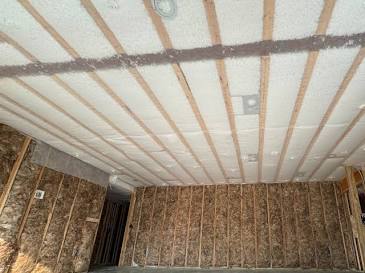
Interwest can install netted-and-blown insulation in accessible ceiling cavities before drywall. We secure mesh or netting with staples, poke a hole in each cavity bay, and blow it full of insulation. We plan around framing, ducts, plumbing, wiring, and fixtures. Your estimate identifies the material, treatment area, and installation specification.
Coordinate the visit with your builder and the required inspections. Share the drywall schedule early. If additional ceiling layers or other sound-isolation components are part of the design, the trades need to agree on the sequence before the ceiling is closed.
Be specific about the sounds
Insulation helps absorb sound in the cavities and can reduce voices, television, and music moving through the completed assembly. Footsteps and dropped objects also transmit vibration through framing. A basement rental with a bedroom below a hard-floor kitchen may need attention beyond cavity insulation. Discuss flooring and ceiling options with the builder while there is still time to choose them.
Keep expectations practical when describing the apartment to future renters. An insulated ceiling does not establish complete soundproofing. Construction details, gaps, connected spaces, and the source of the noise all affect what people hear.
If the apartment is already finished
Some ceilings can be treated with drill-and-fill through planned access openings. We review the ceiling construction and obstacles to determine where insulation can be installed. The quote should explain room protection, access openings, closing, and any separate drywall finishing or painting. Arrange access with occupants before scheduling work.
Local planning and the next step
Check your city’s current basement and accessory dwelling requirements with the building department. Insulation for sound does not by itself establish rental approval, required fire separation, or compliance with the approved plans. For local starting points, see our Eagle Mountain basement services and Saratoga Springs basement services.
For a quote, send the city, floor plans or photos, approximate area, ceiling condition, and the rooms where privacy matters most. Describe whether this is a new basement finish or an occupied apartment so we can plan the work accordingly.
For background on sound ratings and complete assemblies, see National Gypsum’s acoustics questions and answers. Product and assembly test results should be read in the context of the construction they describe.
Browse all basement finishing guides
Explore basement ceiling sound insulation · See our Pleasant Grove basement project