
Existing walls and finished ceilings
Drill-and-Fill Insulation for Existing Walls and Ceilings
Interwest regularly uses drill-and-fill to place insulation into existing wall cavities and finished ceiling cavities without removing the entire surface. We plan the access locations around the assembly, obstructions, and finish responsibilities.
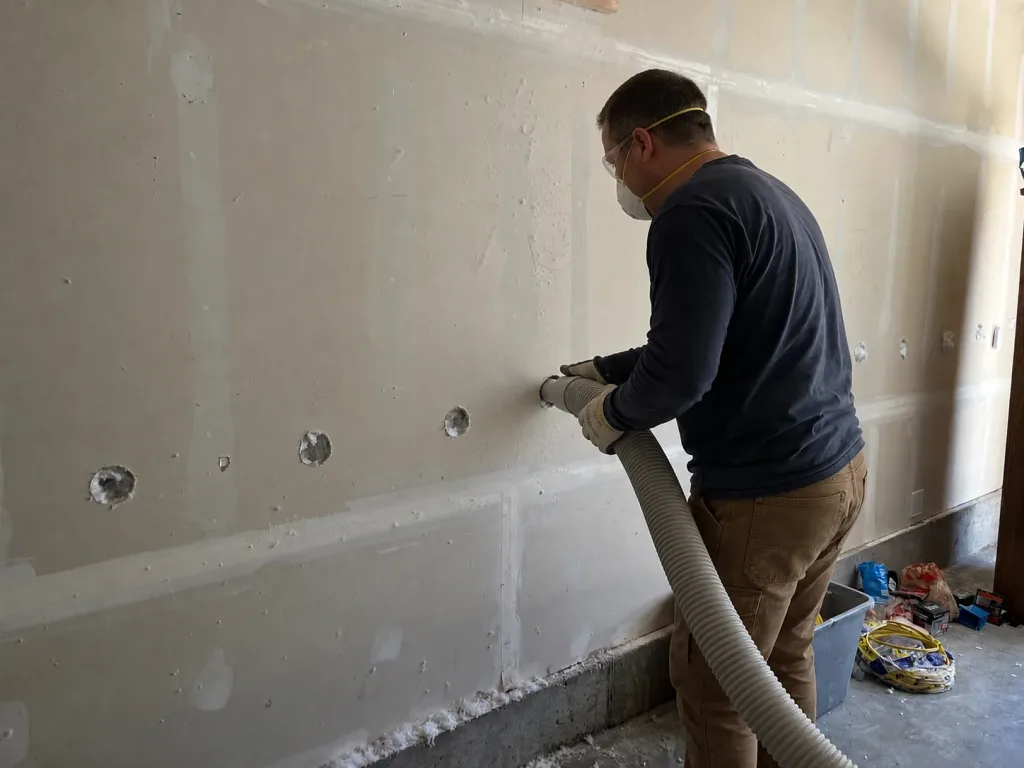
Two regular applications
Walls and finished ceilings can both be insulated
Existing wall cavities
Planned access openings allow insulation to be installed in empty wall cavities from the interior or exterior. Interwest plans around framing, blocking, wiring, plumbing, siding, and finish materials.
Finished ceiling cavities
Access openings through the ceiling surface allow insulation to be placed in the cavities without removing the entire ceiling. This is the finished-surface alternative to netted-and-blown insulation installed while joists are open.
Finished-ceiling process
Protect the room, access the cavities, and install the insulation
Your estimate will define the room-protection plan, access pattern, proposed material, and closing of access openings.
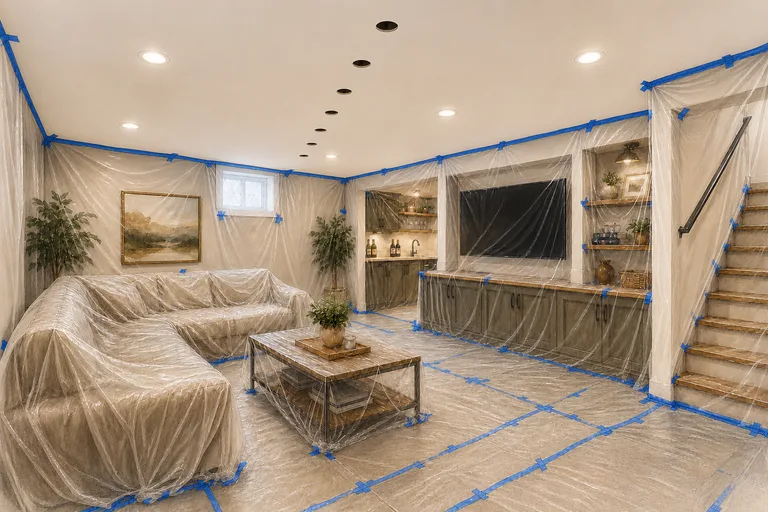
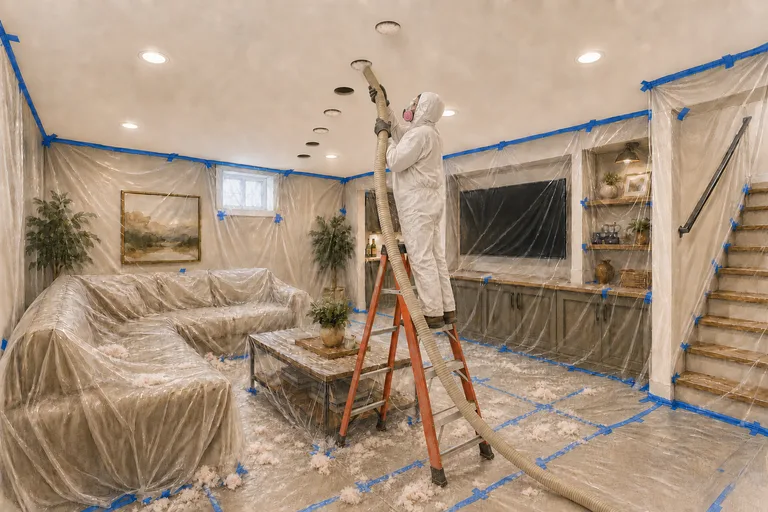
Representative illustrations of the finished-ceiling drill-and-fill process.
Planned for your space
Interwest chooses the access plan for the wall or ceiling
The cavity assembly, access, framing, obstructions, wiring, plumbing, moisture, and surface finish guide the installation plan.
Your estimate will clearly state the access method, material, treatment area, sound or comfort goal, and finish-work responsibility.
Careful planning before drilling
Access openings are part of the plan
Existing walls and ceilings can contain wiring, plumbing, blocking, fire stops, framing changes, old insulation, and other concealed conditions. Interwest chooses access locations deliberately and adapts the plan to what is found inside the cavity.
The estimate describes the intended access side and pattern, areas to be filled, and how any unexpected cavity condition will be handled.
After insulation is installed
Closing an access opening and restoring the finished appearance are separate steps. Your estimate will clearly state how Interwest closes the openings and who completes final drywall finish, texture, paint, siding, or other surface work.
Useful questions before authorizing the work
- Which walls or ceiling cavities are proposed for treatment?
- Where would access be made?
- What material and installation specification are proposed?
- Who is responsible for closing access openings?
- What patching, siding, texture, paint, or other finish work is included?
- Which cavity conditions should the installation plan address?
Drill-and-fill questions
Can most walls or finished ceilings be insulated with drill-and-fill?
Most wall cavities can be filled with drill-and-fill, and many finished ceiling cavities can also be treated without removing all the drywall. How evenly and effectively the insulation fills each cavity depends on what is already inside it, including existing insulation, blocking, wiring, plumbing, fire stops, moisture, and other obstructions. We evaluate the construction and available access, then explain where drill-and-fill should work well and where concealed conditions may limit the result.
Can a finished ceiling be insulated without removing all the drywall?
Yes. Many finished ceiling cavities can be insulated through small, planned access openings without removing the entire ceiling. Interwest reviews the ceiling assembly, cavity access, obstructions, and surface condition, then explains the most practical installation and access-closing plan.
Is finished-ceiling drill-and-fill the same as open-ceiling net-and-blow?
Both are useful approaches for different stages of a project. Finished-ceiling drill-and-fill places insulation through planned openings in an existing ceiling surface, while netted-and-blown insulation fills open joist cavities before the ceiling is covered.
What insulation material will be used?
Your written estimate will name the proposed material and installation specification so you know exactly what will be placed in the cavities. For sound-focused applications, Interwest prefers cellulose whenever project conditions allow because its density helps absorb airborne noise.
Does the service include patching or painting?
Patching and painting are handled according to the written project scope. The estimate will clearly state whether Interwest closes the access openings, the stage to which they will be closed, and whether final texture, paint, siding, or other finish work belongs to Interwest, the homeowner, or another trade.
How much does drill-and-fill cost?
Every drill-and-fill project receives pricing based on the treatment area, access, wall or ceiling assembly, obstructions, material, surface protection, and completion scope. Interwest will provide a clear written estimate for the actual project so you can see exactly what is included. Review the factors that shape an insulation estimate.
Google customer reviews
See why Utah homeowners recommend Interwest
Customers consistently mention responsive communication, careful work, professionalism, and results they are glad to recommend.